Modern businesses are being called to evolve. The old way of operating through pressure, control, overworking, and one-size-fits-all management is no longer sustainable for many companies. Employees want to feel seen, understood, and valued. Leaders want teams that communicate better, work more efficiently, stay engaged, and contribute with greater purpose. This is where Human Design can offer a powerful new perspective.
Using Human Design in business helps to create a new way of operating. It supports a business model that works with the natural flow, communication style, energy, and rhythm of people instead of forcing everyone to function the same way. When a company begins to understand how each person is naturally designed to work, make decisions, communicate, and contribute, it can create healthier systems, stronger teams, and a more aligned workplace culture.
What Is Human Design?
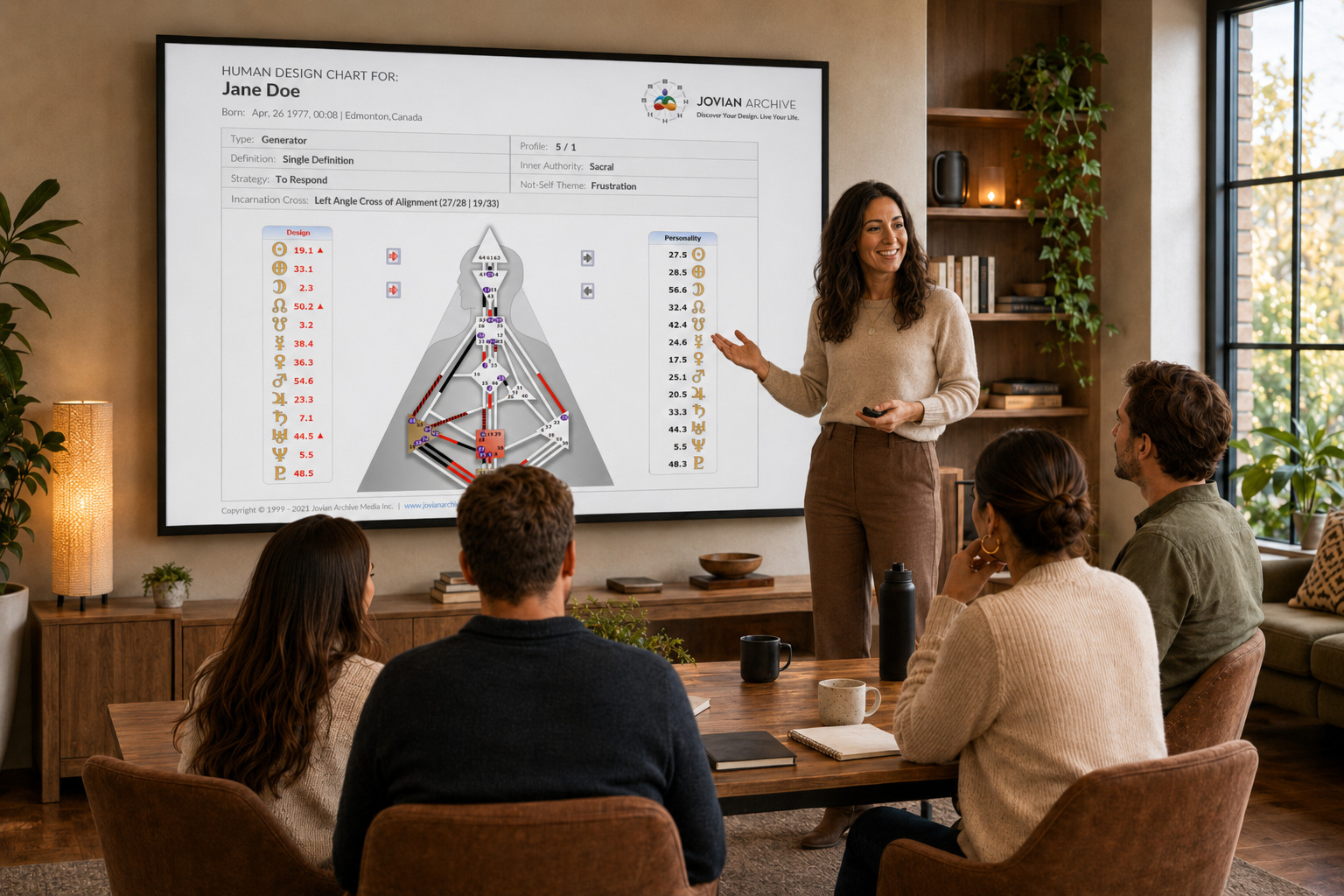
Human Design is a self-awareness system that combines elements of astrology, the I Ching, the chakra system, the Kabbalah Tree of Life, and quantum principles. It provides a chart, often called a BodyGraph, that offers insight into how a person is designed to use their energy, make decisions, interact with others, communicate, lead, and respond to life.
In a business setting, Human Design can be used as a practical tool for understanding people. It does not put employees in a box or limit what they are capable of. Instead, it helps leaders and teams recognize that people are naturally different. Some people are designed to move quickly and initiate. Others are designed to respond, build, guide, observe, organize, or bring fresh perspective.
Human Design helps answer questions such as:
- How does this person make the best decisions?
- What type of work environment supports them?
- How do they communicate most effectively?
- What causes them stress or burnout?
- Where do they bring the most value to a team?
- How do they naturally lead, collaborate, or create?
- When this information is applied wisely, Human Design can become a bridge between personal awareness and practical business improvement.
Moving Beyond the One-Size-Fits-All Business Model
Many businesses are still built on the assumption that everyone should work the same way. Employees are often expected to communicate the same way, make decisions at the same speed, attend the same types of meetings, follow the same schedules, and produce in the same rhythm.
This approach can create unnecessary pressure and conflict.
One employee may need time to process before making a decision. Another may need to speak things out loud in the moment. One person may thrive with structure and repetition, while another may need variety and movement to stay engaged. One team member may naturally see the big picture, while another is gifted at maintaining the details.
When these differences are ignored, people can become frustrated, misunderstood, or misused. Leaders may label someone as slow, scattered, too quiet, too intense, too independent, or too sensitive, when in reality that person may simply be operating differently.
Human Design helps businesses move away from judgment and toward understanding.
Instead of asking, “Why can’t this person work like everyone else?” Human Design encourages leaders to ask, “How is this person designed to work best, and how can we use that in a way that benefits both the individual and the business?”
That question can change everything.
4 Ways Human Design Can Benefit Your Business
Improving Employee Satisfaction
Employee satisfaction increases when people feel understood and supported. Many employees become disengaged not because they lack skill or motivation, but because they are placed in roles, environments, or management structures that work against their natural design.
For example, a person who is naturally designed to guide, advise, and see systems clearly may struggle if they are expected to constantly produce task after task without being invited into strategic conversations. Another person who thrives on variety may feel trapped and drained in a highly repetitive role. Someone who needs autonomy may become frustrated when they are micromanaged.
Human Design can help leaders better understand what each employee needs to feel energized and fulfilled.
A company that implements Human Design training might discover that certain employees are better suited for client relationships, while others are better suited for operations, innovation, leadership, quality control, or systems improvement. This does not mean making dramatic changes overnight. Sometimes small adjustments can create major improvements.
For example, an employee who has been struggling in a rigid administrative role may thrive when given more project-based work. A quiet team member may begin contributing more when they are given meeting questions in advance. A fast-moving employee may become more effective when given freedom to solve problems creatively instead of being forced into a narrow process.
When employees feel that their natural strengths are recognized, they are more likely to feel valued. When they feel valued, they are more likely to stay engaged.
Creating Healthier Communication
Communication is one of the biggest challenges in business. Many workplace conflicts are not caused by bad intentions. They are caused by different communication styles, different decision-making processes, and different expectations.
Human Design can help teams understand why people communicate differently.
Some people process information quickly and speak in the moment. Others need time alone before they can offer a clear answer. Some people are naturally direct and initiating. Others are more receptive and need to be invited into the conversation. Some people communicate through questions, while others communicate through insight, emotion, instinct, or response.
Without awareness, these differences can create tension.
For example, a manager may expect an immediate answer from an employee who needs time to process. The manager may interpret the delay as uncertainty or lack of confidence. Meanwhile, the employee may feel pressured and unable to access their best thinking. Human Design can help both people understand what is happening. The manager can learn to give that employee time, and the employee can learn to communicate their process clearly.
A practical shift could be as simple as saying, “I need some time to sit with this before I give you my best answer. I’ll get back to you by tomorrow.”
That small change can prevent misunderstanding and build trust.
Human Design training can also improve meetings. Instead of allowing the fastest or loudest voices to dominate, leaders can create meeting structures that support different types of contributors. Some team members may share best in live discussion. Others may offer better insight after reflection. Some may need direct invitations to speak. Others may contribute more clearly through written follow-up.
By honouring different communication rhythms, businesses can access more wisdom from the whole team.
Strengthening Workplace Culture
A healthy workplace culture is built on trust, respect, and understanding. Human Design can support culture by helping people see each other more clearly.
When employees understand that their coworkers are designed differently, they become less likely to take things personally. A quiet person may not be disengaged. They may be processing. A fast-moving person may not be reckless. They may be designed to move quickly. A person who asks many questions may not be challenging authority. They may be seeking clarity. A person who needs independence may not be rejecting the team. They may simply need space to operate well.
This awareness can reduce judgment and increase compassion.
For example, imagine a team where one employee wants to move quickly on new ideas, while another wants to slow down and examine the details. Without understanding, this can become a source of conflict. The fast-moving employee may see the detail-oriented employee as negative or resistant. The detail-oriented employee may see the fast-moving employee as careless.
With Human Design awareness, the team can recognize that both people bring value. One brings momentum. The other brings refinement. Together, they can create better results than either would alone.
This creates a culture where differences are not treated as problems. They are treated as strengths.
Reducing Turnover
High turnover is costly. It affects productivity, morale, training costs, client relationships, and team stability. Many employees leave not because they are incapable of doing the job, but because they feel misaligned, unsupported, burned out, or misunderstood.
Human Design can help companies identify misalignment before it becomes resignation.
If an employee is constantly frustrated, exhausted, angry, bitter, or disappointed, Human Design can offer clues about where they may be operating against their natural design. A leader can then ask better questions:
Is this person in the right role?
Are they being managed in a way that supports them?
Are they using their strengths?
Are they carrying responsibilities that drain them?
Are they being recognized for the value they actually bring?
Do they need more structure, more autonomy, more variety, or more time to make decisions?
This kind of awareness can help leaders make adjustments before an employee reaches a breaking point.
For example, a valuable employee may be considering leaving because they feel unseen in their current role. Through Human Design training, leadership may realize this person has a natural ability to guide systems, identify inefficiencies, and advise others. Instead of losing them, the company could shift part of their role into process improvement or team guidance. The employee feels recognized, and the company benefits from their natural insight.
This is how Human Design can support retention. It helps people feel like they belong in the business, not because they are forced to fit, but because their true strengths are understood.
Improving Efficiency
Efficiency is not just about doing more in less time. True efficiency happens when energy is used correctly.
In many companies, a great deal of energy is wasted through unclear communication, poor role alignment, unnecessary meetings, mismatched expectations, and employees working against their natural strengths. Human Design can help reduce this waste.
When people are placed in roles that match their energy, they often become more productive with less resistance. When teams understand how to communicate with each other, less time is lost to confusion and conflict. When leaders understand decision-making styles, they can create better processes. When employees know how they operate best, they can take more responsibility for their own energy and contribution.
For example, a company may have an employee who is excellent at starting new initiatives but loses energy when asked to maintain them long-term. Another employee may be excellent at sustaining and refining what has already been started. Without Human Design awareness, the first employee may be criticized for not following through, while the second may be overlooked because they are not as visibly innovative.
With awareness, the business can pair these strengths. One person initiates and creates movement. The other builds, stabilizes, and improves the process. The result is better efficiency and less frustration.
Human Design helps businesses stop forcing people into the wrong energetic roles and start designing workflows around natural strengths.
Real-Life Application: Examples of How Human Design Can Transform Your Business
Practical Example: A Company Implementing Human Design Training
Imagine a growing wellness company with twenty employees. The business is successful, but behind the scenes there are challenges. The leadership team is overwhelmed. Communication between departments is inconsistent. Some employees feel overworked while others feel underused. Meetings are too long and often unproductive. Turnover is increasing.
The company decides to implement Human Design training.
First, each team member receives an overview of their Human Design chart. They learn about their energy type, decision-making authority, communication tendencies, and natural work rhythm. The goal is not to label anyone, but to create self-awareness.
Next, the leadership team reviews how different employees are currently being used in the business. They discover that one employee who has been struggling with repetitive tasks is actually highly creative and thrives when solving new problems. Another employee who rarely speaks in meetings has valuable strategic insight but needs time to prepare before sharing. A manager who has been seen as too independent is actually most effective when given freedom to initiate, as long as they keep others informed.
The company begins making practical changes.
Meeting agendas are sent ahead of time.
Team members are given different ways to contribute: verbally, in writing, and in follow-up.
Managers learn how each employee makes decisions.
Roles are adjusted to better match natural strengths.
Employees are encouraged to communicate their needs more clearly.
Leadership creates agreements around autonomy, deadlines, collaboration, and communication.
Over time, the culture begins to shift. Employees feel less judged and more understood. Managers stop trying to motivate everyone the same way. Meetings become shorter and more effective. People begin using language that supports awareness instead of blame. The company starts seeing better collaboration, fewer misunderstandings, and improved morale.
This is a practical example of how Human Design can move from theory into real business results.
Practical Example: Sales and Operations Working Better Together
Another example could involve a company where the sales team and operations team are constantly in conflict.
The sales team moves quickly, makes promises to clients, and wants fast action. The operations team feels pressured, overwhelmed, and frustrated by last-minute requests. Sales sees operations as slow. Operations sees sales as careless.
Human Design training could help both teams understand their different rhythms.
Some salespeople may be naturally designed to initiate conversations, respond quickly, and create momentum. Some operations team members may be designed to stabilize, organize, and ensure that promises can actually be delivered. Both are necessary.
With this awareness, the company could create better systems. Sales may still move quickly, but they must inform operations earlier. Operations may create clearer timelines and capacity guidelines. Leadership may design a communication process that allows momentum without creating chaos.
The result is less blame and more collaboration.
Sales feels supported. Operations feels respected. Clients receive better service. The business becomes more efficient.
Practical Example: Leadership Decision-Making
Human Design can also help leadership teams make better decisions.
In many companies, conflict happens because leaders have different decision-making styles. One leader may want to decide immediately. Another may need emotional clarity over time. Another may rely on instinct. Another may need to talk through the options. Without awareness, these differences can create impatience and mistrust.
Human Design helps leaders understand that not everyone accesses clarity the same way.
A leadership team could use this insight to create decision-making agreements. Urgent decisions may have one process. Major strategic decisions may have more time built in. Leaders may agree not to pressure each other into immediate answers when the decision does not require urgency. They may also agree to clearly communicate when they are ready to commit.
This can lead to better decisions and healthier leadership dynamics.
A New Way of Operating a Business
The true benefit of Human Design in business is that it helps create a more natural and sustainable way of working.
Instead of forcing people into systems that drain them, businesses can create systems that honour how people actually operate. Instead of treating differences as problems, leaders can learn to use those differences as strengths. Instead of relying only on external strategy, companies can also develop internal alignment.
This does not mean removing structure, accountability, or performance expectations. A Human Design-informed business still needs clear goals, strong leadership, financial responsibility, effective systems, and measurable outcomes. The difference is that those systems are built with a deeper understanding of the people who must operate within them.
Human Design brings the human being back into the center of business.
When employees understand themselves, they take more responsibility for their energy, communication, and decisions. When leaders understand their teams, they can lead with more awareness and precision. When teams understand one another, collaboration becomes easier. When people are placed in roles that fit their strengths, efficiency naturally improves.
Conclusion
Using Human Design in business offers a powerful opportunity to create workplaces that are more aligned, conscious, and effective. It helps companies understand the natural flow, communication styles, and rhythms of their people. This can improve employee satisfaction, strengthen culture, reduce turnover, and increase efficiency.
Human Design does not replace traditional business strategy. It enhances it. It adds a human-centered layer that helps leaders make better decisions about people, roles, communication, leadership, and workflow.
A business is not just a machine made of systems and targets. It is a living network of people. When those people are understood, supported, and aligned with their natural strengths, the entire company becomes stronger.
The future of business is not about forcing people to work harder in ways that disconnect them from themselves. It is about creating environments where people can work with greater awareness, authenticity, and alignment.
Human Design offers a map for doing exactly that.